Many women look for some tips after a cesarean delivery. Learn about the most important ones in the following article.
The correct sleeping position after a cesarean delivery
After a cesarean delivery, it is advised to follow these guidelines for proper sleep: 1. It is preferable to sleep on your side rather than on your back, as this will be more comfortable for you and will help reduce pressure on the wound, especially with pain in the right side of the abdomen after a cesarean delivery during the postpartum (nifas) period. 2. You can use extra pillows to support your body and relieve pressure on the wound; a small pillow can be placed under the abdomen and another pillow between the knees to improve the sleeping position. 3. The head of the bed can be raised slightly using pillows to raise the upper part of the body, as this will help reduce swelling and contribute to a comfortable sleep. 4. It is advised to avoid standing or sitting for long periods in the early period after the cesarean operation, but you should rest and lie down regularly to shorten the recovery period after delivery. 5. Make sure to follow the instructions of Dr. Ahmed Marzouk for the wound after delivery, as the doctor may recommend placing a clean dressing on the wound and changing it regularly. 6. If you feel difficulty moving or need extra help, ask your husband to help you change your sleeping position and carry out daily activities on your behalf.
Warning signs after a cesarean delivery
If you notice any of the following signs after a cesarean delivery, you must go to the emergency department or call the doctor immediately: 1. Heavy bleeding: if you experience severe and abnormal bleeding after the cesarean operation, this may indicate an emergency problem requiring immediate intervention, such as internal bleeding. 2. Severe pain or swelling in the legs: if you have sharp pain in the legs or abnormal swelling, this may be a sign of blood clotting in the blood vessels. 3. A rise in temperature: if you have a fever after a cesarean delivery, this fever may indicate an infection in the surgical wound or another infection. 4. Difficulty breathing or chest pain: if you experience difficulty breathing, sharp chest pain, or shortness of breath, these may be signs of serious respiratory problems such as a pulmonary embolism. 5. An increase in bleeding or a change in yellowing: if the bleeding increases or you notice a change in the yellow color of the skin or eyes, this may be a sign of liver problems or internal bleeding. Contact us immediately if you feel any of the previous symptoms.
Rest completely assured that such complications happen with an inexperienced doctor. With Dr. Ahmed Marzouk we have many years of experience and a medical team to provide the necessary follow-up at the highest level.
Foods forbidden after a cesarean delivery
You should avoid exercising after a cesarean delivery for a while, and there are also some foods that may be avoided after a cesarean delivery to avoid some potential problems such as gas, bloating, and irritation of the digestive system. Here are some examples of foods that are forbidden or preferably avoided for a period after a cesarean delivery: 1. Heavy and fatty foods: avoid heavy and fatty foods that are difficult to digest and that may cause bloating and a feeling of heaviness, such as fast food and fried foods. 2. Spicy foods and strong seasonings: spicy foods and strong seasonings can increase the likelihood of heartburn or digestive irritation, so it may be best to avoid them or reduce their amount in meals. 3. Gas-producing foods: some foods and drinks such as beans, lentils, and carbonated drinks can cause an increase in gas and bloating, so it may be best to avoid them in the early period after the cesarean operation. 4. Caffeine and alcohol: it is preferable to reduce the consumption of drinks containing caffeine or alcohol, as they can affect your sleep and affect the fluid balance in the body; instead, keep drinking beverages that cleanse the uterus after a cesarean delivery, such as anise, turmeric with milk, and others. 5. Preserved and processed foods: preserved and processed foods contain preservatives and chemicals that may sometimes be harmful, so it is preferable to eat fresh foods prepared at home rather than canned or processed foods, as they are a better laxative for constipation after a cesarean delivery, especially vegetables.
PCA injection after a cesarean delivery
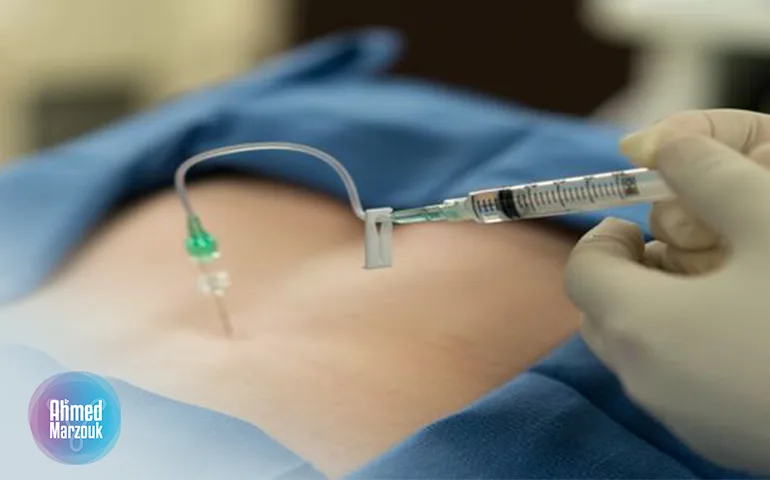
After a cesarean delivery, a PCA (Patient-Controlled Analgesia) device is used to reduce pain effectively, as the PCA device allows the patient to control the doses of painkillers according to her need. This means the patient can press the button to deliver a dose of painkiller through the catheter or the tube connected to the patient's vein, to reduce her feeling of pain as much as possible after delivery, making it the best painkiller after a cesarean delivery.
Causes of the absence of postpartum bleeding after a cesarean delivery
After a cesarean delivery, some women may experience a delay in postpartum (nifas) bleeding, or they may experience a complete stop in the bleeding. Among the possible causes of this situation are the following: 1. Weak uterine contractions: weak uterine contractions may occur after a cesarean delivery, leading to reduced bleeding or a complete stop. 2. A decrease in hormone levels: performing the cesarean may lead to a decrease in the secretion of the hormones that play a role in postpartum bleeding, such as estrogen, and therefore the onset of bleeding may be delayed due to this decrease. 3. Blood collection inside the uterus: blood may collect inside the uterus due to blood pooling at the site of the cesarean surgery, and this collection may lead to the absence of normal bleeding. 4. Uterine inflammation: inflammation of the uterus may occur after a cesarean delivery, affecting postpartum bleeding, and this inflammation may be the result of an infection or a collection of fluids inside the uterus.
When does the newborn breastfeed after a cesarean delivery?
Usually the newborn is able to breastfeed immediately after a cesarean delivery in the delivery room or in the operating room when the mother is in good and stable condition. In general, however, the first breastfeeding after a cesarean delivery differs slightly from a natural birth and may take a longer time. The timing of the first breastfeeding can be affected by some factors such as the mother's health condition and the anesthesia used. Nevertheless, it is preferable to place the newborn beside the mother and have her attempt to breastfeed him to encourage natural breastfeeding, as the newborn may need some help with the correct breastfeeding position at first, and our nurses can provide you with support and advice wholeheartedly.
Is bathing allowed after a cesarean delivery?
Yes, after a cesarean delivery the mother is usually allowed to bathe within a period ranging from 24 to 48 hours, but this can differ according to the recommendation of Dr. Ahmed Marzouk and the mother's health condition. It is also advised to observe these tips after a cesarean delivery for bathing: 1. Follow the medical team's instructions: follow the guidance provided by our nurses about when to bathe after a cesarean delivery. 2. Use warm water: it is preferable to use warm, not hot, water for bathing, as warm water may help you relax and relieve feelings of tension. 3. Avoid massaging the surgical area forcefully during bathing, as you should avoid using a loofah or vigorous scrubbing on the surgical area until it heals completely. 4. It is advised to gently wash the area adjacent to the wound using water and a suitable soap and to dry it well after bathing. 5. Monitor the wound and the surrounding area after bathing, and if you notice any unusual changes such as severe redness, swelling, or fluid leakage, you must contact us immediately.