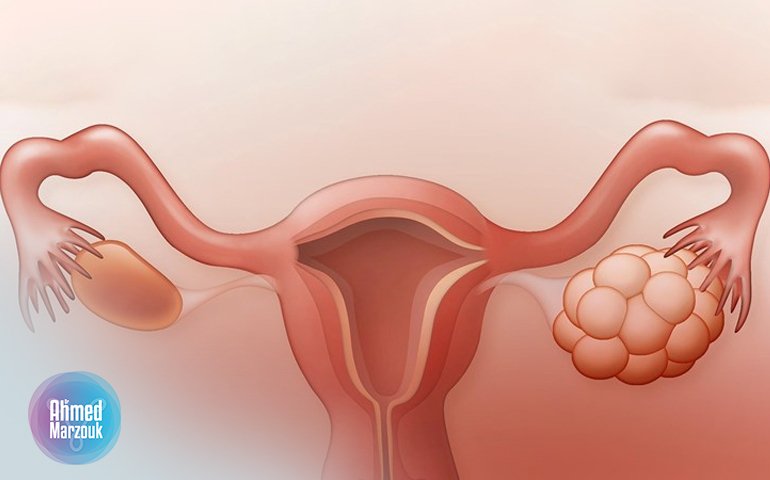
Polycystic ovary syndrome (PCOS) is a common condition among many women after puberty. It occurs due to a disturbance in the reproductive hormones a woman produces, causing an increase in the production of the male hormone (androgen), which affects the ovary's function in producing eggs (the egg may not develop normally or may not be released from the ovary at all). This causes a disruption in a woman's menstrual cycle. PCOS is defined as a condition in which thin, fluid-filled follicles appear on the ovary itself, giving it its cystic appearance.
When might I suspect that I have PCOS?
If you notice any of the following:
Excess body hair appears, facial hair becomes thicker and darker in color, and body hair growth increases beyond normal.
- Obesity, especially around the waist, with difficulty losing weight.
- Menstrual irregularity, in the form of heavy periods, absent periods, or a long interval between cycles each month.
- Appearance of acne.
- Appearance of acanthosis nigricans (thick, dark skin on the neck and under the arms).
- Pain in the pelvic area.
- Irregular ovulation.
- Infertility.
- Increased insulin resistance.
- Anxiety and sleep disturbance.
- Depression.
- Eating disorders.
- Exhaustion and fatigue.
- Hair loss.
What are the causes that lead to PCOS?
Genetic factors:
Although there is no specific gene responsible for PCOS, there is a group of genes that play a role in the transmission of this condition. Studies have found that about 25% of women who suffer from this condition had mothers who were affected by it, and that nearly 30% of women affected by it also had sisters who were affected.
Insulin resistance:
This is a condition in which the body's cells become less sensitive to insulin, so the body tries to compensate by secreting more insulin, which causes an increase in insulin in the body. This leads the ovary to secrete more androgen hormone (a group of male hormones) and the appearance of PCOS symptoms.
Hormonal disorders:
Many women with PCOS suffer from hormonal disorders, such as an increase in male hormones, especially elevated testosterone, elevated levels of both prolactin and luteinizing hormone, and a decrease in sex hormone-binding globulin. These disorders appear as a result of insufficiency in the ovary itself or a dysfunction in the glands responsible for secreting these hormones.
Low-grade inflammation:
This results from an increase in the white blood cells responsible for fighting infection, which leads to increased androgen secretion from the ovary.
Who is most at risk of developing PCOS?
- Those who suffer from obesity and insulin resistance.
- Women who have a family history of the condition.
- Patients with type 2 diabetes.
- Women who suffer from pelvic inflammation.
- Those with endometriosis.
Factors that help predict the presence of PCOS:
- Knowing the patient's medical history and the symptoms she experiences.
- Conducting tests to check the levels of insulin, testosterone, prolactin, luteinizing hormone, and sex hormone-binding globulin.
- Checking the body mass index, the presence of acanthosis nigricans, an increased rate of excess body hair, and high blood pressure.
- Ultrasound imaging of the pelvic area to detect polycystic ovaries.
How can PCOS be treated with Dr. Ahmed Marzouk?
The treatment of PCOS depends on a set of factors such as:
- The patient's age.
- The patient's general health.
- The severity of the symptoms.
- The desire to become pregnant in the future.
Treatment plans range from changing lifestyle at first, then taking medications, and surgical intervention:
Lifestyle change: You can change your lifestyle and commit to a healthy diet to reduce insulin resistance and lose weight, as well as practice some physical exercise.
Treatment with medications:
- By taking birth control pills: These are used when the patient does not wish to become pregnant, and they help control menstrual cycles and lower androgen levels.
- By taking diabetes medications: These are used to reduce insulin resistance and lower androgen hormone levels.
- Through ovulation-stimulating medications for those who wish to become pregnant, which work to increase the rate of ovulation.
- Through medications to stop hair loss.
- To treat depression and sleep disorders.
- Removing excess hair using laser technology.
Treatment using surgical intervention: This is a simple surgical procedure performed using a laparoscope, in which the ovary is cauterized (ovarian drilling) to treat fertility problems.
Complications of PCOS:
If PCOS is not treated, it increases the chances of developing the following conditions:
- Heart disease.
- High blood pressure.
- Type 2 diabetes.
- High cholesterol.
Pregnancy and PCOS:
A pregnant woman with obesity and PCOS becomes more susceptible to gestational diabetes and high blood pressure after pregnancy, so you should follow these tips:
- Maintaining a normal blood sugar level before pregnancy.
- Having a healthy weight and a body mass index between 18.5 and 25 before pregnancy.
- Limiting caffeine consumption.
- Taking dietary supplements such as folic acid.
How do you protect yourself from developing PCOS?
- Maintaining a healthy weight and a body mass index not exceeding 25.
- Eating healthy meals that contain vegetables, fruits, and fiber, and avoiding starches such as white bread and white flour to prevent insulin resistance.
- Avoiding stress.
- Keeping your blood sugar level under control and taking diabetes medications regularly, especially if you are a diabetic patient.
- Exercising regularly to maintain your healthy weight and improve your mental well-being.