Menopause is the end of a woman's menstrual cycle, and it includes all the changes she experiences before or after menstruation stops. It also indicates the end of her reproductive years.
Causes of menopause: Women are born with eggs stored in their ovaries. The ovary releases an egg every month. It also produces estrogen and progesterone hormones, which control menstruation and ovulation.
Menopause is when the ovaries stop releasing eggs. It typically happens after the age of 40 and is a natural part of the aging process. However, some women may experience early menopause. It can be the result of surgery, such as the removal of the ovaries in a hysterectomy, or as in chemotherapy cases, which damages the ovaries and causes them to cease producing eggs early, changing the levels of estrogen and progesterone. If it occurs before the age of 40, it is called premature menopause.
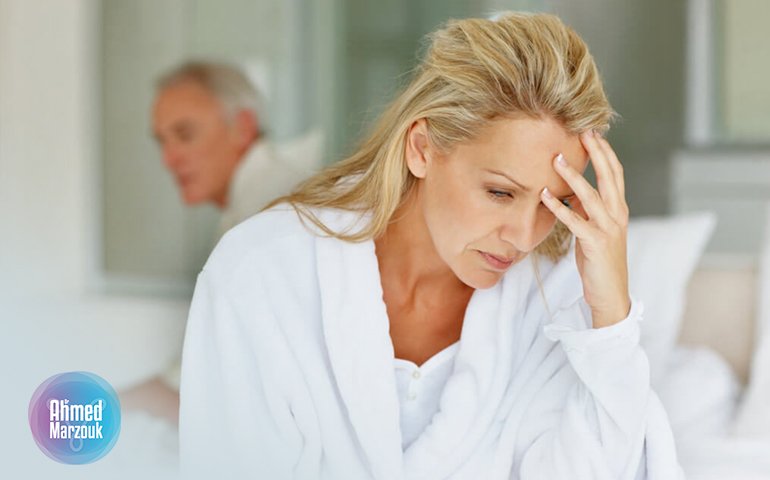
Menopause symptoms: Most women complain of several symptoms, the most common of which are hot flashes, which are sudden feelings of warmth and hotness in the upper part of the body, accompanied by flushing and sweating. The intensity of hot flushes can range from mild in most women to severe in others. You may also notice:
Menopause symptoms last about 4 years, as the period varies from one woman to another.
- Vaginal dryness.
- Reduced libido.
- Needing to urinate often.
- Sleep problems.
- Emotional changes.
- Excessive dryness of the skin, eyes, and mouth.
What happens during menopause? Premenopause: This period usually begins several years before menopause, when the ovaries slow down in making estrogen. This period lasts until menopause occurs when the ovaries stop releasing eggs. During the last year or two of this period, estrogen level decreases faster, and many women begin to suffer from menopausal symptoms. Menopause: Menopause begins with the passage of a year since the last menstrual period when the ovaries stop releasing eggs and producing estrogen. After menopause: lt includes the years following menopause. Menopausal symptoms usually decrease, but the health risks associated with low estrogen increase.
Diagnosing menopause: Your doctor will determine if you have reached menopause based on your symptoms. Your doctor will also check your blood levels of: FSH: It usually rises as you approach menopause. Estradiol: It shows the amount of estrogen produced by the ovaries that decrease at menopause. Thyroid hormones: To identify thyroid problems that can affect the menstrual cycle and cause menopause-like symptoms.
Menopause treatment: Menopause is a natural process, and many symptoms disappear over time. But if it's causing problems, some treatments can help you feel better. Common treatments include: Hormone replacement therapy: This includes the administration of medications to replace hormones that are no longer produced by the body. Certain medications can help treat hot flashes, control vaginal symptoms, and strengthen bones. But it may also put a woman at risk of developing health problems such as heart disease or breast cancer, so the lowest effective dose should be taken for the shortest possible time. Topical hormone therapy: It represents the applying of estrogen cream to the vagina to help treat its dryness. Non-hormonal drugs: It represents taking antidepressants and nerve medications. Osteoporosis medications: These include medications or vitamin D supplements that help maintain bone strength.
Menopause may cause new health challenges and problems; Therefore, you should speak with Dr. Ahmed Marzouk, Consultant in Obstetrics and Gynecology, about any symptoms you feel or questions you have.