With marriage being delayed for many young women in recent times, many of them have developed fears of not being able to conceive. From here the technique of egg freezing emerged as a safe solution to this problem, in which the eggs are preserved by retrieving them from the woman's body and freezing them until the appropriate time to conceive is available.
What is the most suitable age for egg freezing, and how long can a frozen egg be kept?
The ovarian reserve declines after a woman reaches the age of thirty-five, and the quality of the eggs gradually decreases until reaching menopause, while the chance of a successful pregnancy declines and the odds of having a baby with birth defects increase. For this reason, many women resort to freezing 10 eggs or more before reaching this age. Some women resort to egg freezing at the age of forty, but the most suitable age remains from the late twenties up to the age of thirty-five, because the eggs retain their quality then. The quality of the eggs can be preserved for up to 10 years after the freezing procedure.
When should you resort to egg freezing?
- If you suffer from genetic diseases that affect the quality of the eggs or cause infertility.
- If you suffer from autoimmune diseases such as lupus, or blood diseases such as sickle cell anemia.
- If you are a cancer patient undergoing chemotherapy or radiotherapy, which may affect your ability to conceive in the future.
- If you are thinking of postponing marriage and pregnancy until after forty for educational or social reasons.
- If you wish to preserve the extra eggs after an in vitro fertilization (IVF) procedure.
How is egg freezing done?
The egg freezing process is divided into several stages, starting with the preparatory stage, then the ovulation-stimulation stage, then egg retrieval, and then freezing.
1. The preparation stage for egg freezing: the doctor performs tests to check for any infectious diseases such as hepatitis and AIDS, tests to detect hormone levels such as ovarian reserve (AMH), follicle-stimulating hormone (FSH), and estradiol, and an ultrasound examination to assess the condition of the ovaries and determine the number of mature eggs. He may also request an egg-reserve test or an ovarian-reserve test.
2. The ovulation-stimulation stage: after reading the ovarian-reserve test, the doctor gives a set of medications to stop the menstrual cycle, then hormonal treatments to stimulate the ovaries to produce more eggs. He then carries out blood tests and an ultrasound examination to monitor the egg-production process.
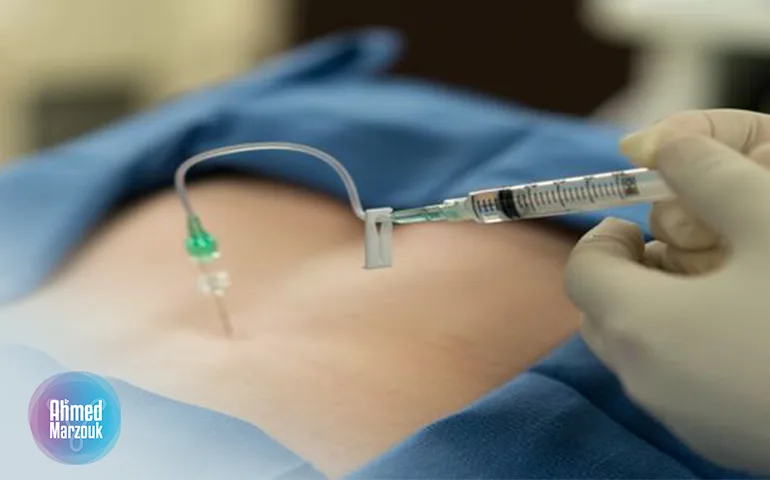
3. The egg-retrieval stage: the doctor retrieves the eggs, which number between 5 and 25, using a small needle connected to an ultrasound probe through the vagina. This procedure is done under the effect of anesthesia using pain-relieving injections. The procedure lasts about 20 minutes, after which the woman can leave the hospital.
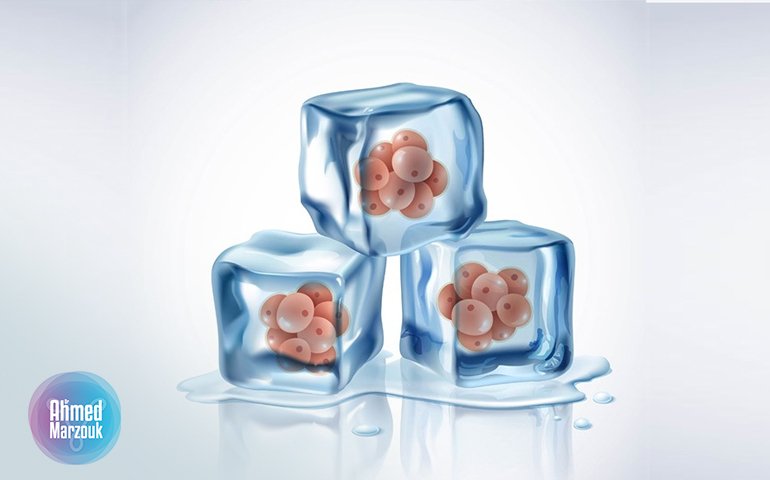
4. The egg-freezing stage: after the eggs are retrieved, they are frozen in the embryology laboratory at below-zero temperatures until the woman wishes to conceive.
How are frozen eggs used to achieve pregnancy?
The frozen eggs are thawed and then fertilized with sperm using in vitro fertilization, and then implanted in the mother's uterus. After the success of this process, pregnancy symptoms appear on the woman, and she needs complete rest.
What are the possible risks of egg freezing?
The egg freezing process may cause some rare harms, including the following:
- The puncture needle used to extract the eggs may cause bleeding or infection in the woman.
- Pain in the ovary as a result of the hormonal treatment injections.
- Some minor complications from the anesthesia used during the egg-retrieval procedure.
- The possibility of some side effects resulting from ovarian stimulation, such as vomiting, nausea, diarrhea, bloating, and abdominal pain.
- If the frozen eggs are used for pregnancy at a late age, the chance of pregnancy failure and miscarriage increases.
What is the ruling on egg freezing, and is it permissible (halal)?
The Egyptian Dar al-Ifta has permitted egg freezing if its purpose is to preserve offspring, as it is considered a complement to the IVF process, and scholars have permitted it under the following conditions:
- The frozen fertilized egg must be placed only in the uterus of the egg's owner, and it is not permitted to place it in the uterus of another woman.
- The frozen egg must be kept in a safe place and must not be mixed with other eggs, to prevent the mixing of lineages.
- The motive for performing the egg freezing procedure must be legitimate.
- The fertilization of the frozen egg must be done with the sperm of the husband only, and the marriage must be in place at the time of fertilization.
How much does egg freezing cost?
The required cost varies according to:
- The tests needed to monitor the ovulation process and to check for infectious diseases.
- The medications used to stimulate the ovaries, as well as the price of the ovulation-related tests such as the price of the ovarian-reserve test or the egg-reserve test.
- The number of ultrasound sessions.
- The cost of storing the eggs in the egg bank and the freezing technique used.
Is egg freezing a safe procedure?
Egg freezing is a safe procedure and has no connection to an increased risk of the fetus having birth defects or malformations, and it does not increase pregnancy complications compared with a natural pregnancy.
The success rate of egg freezing, and does pregnancy occur with a low ovarian reserve?
The success rate of egg freezing is high, but the success rate of the in vitro fertilization that uses the frozen eggs varies according to several factors, including the woman's age, the condition of the egg at retrieval and whether it was frozen after or before fertilization, as well as the variation in the normal level of the egg-reserve hormone. The egg reserve at the age of forty differs from the reserve at thirty, and likewise at twenty years of age, and whether stimulation affects the egg reserve or not, and so on.
In the end, if you are afraid of getting older and you want to preserve your chance of conceiving through egg freezing, you can turn to the egg freezing technique without any fear of losing your chance to conceive at all.