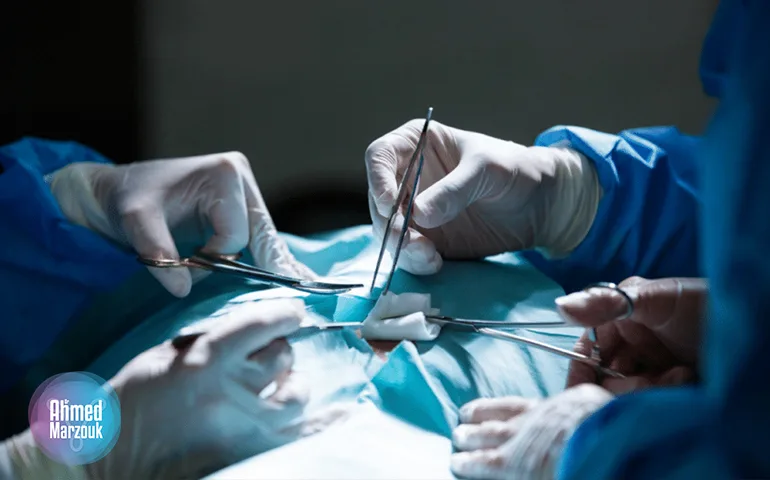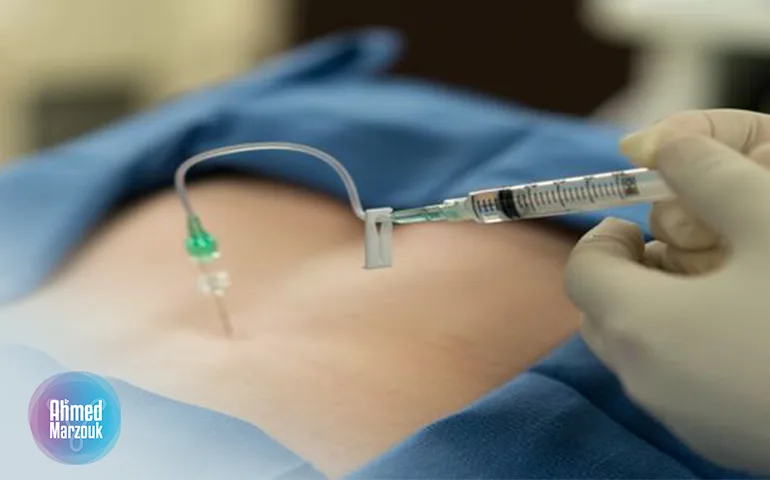
Pain remains one of the main fears women experience with a cesarean delivery, alongside their fear of general anesthesia and its complications. This is why painless cesarean delivery using a back injection (epidural) appeared. It is a type of regional anesthesia in which the mother stays awake throughout the stages of the cesarean delivery but does not feel pain, and it also helps reduce the amount of anesthetic drugs that reach the fetus. It is injected into the lower back, causing loss of sensation in the area around the abdomen and the entire pelvic region.
There is also more than one type of back injection, including the epidural injection (epidural anesthesia) and the spinal injection (spinal cord fluid anesthesia).
Many women ask: what is the back injection for natural birth? And about the benefits and harms of the epidural for natural birth. The epidural is used in natural birth to relieve labor pain, and epidural experiences have achieved great success in relieving natural birth pain when a woman fears the pain, as it relieves pain in the lower half of the body while keeping the mother able to push to help with delivery. In cesarean deliveries, either a spinal or an epidural is used.
Is the back injection the same as spinal anesthesia?
- Spinal anesthesia works faster than the epidural because the anesthetic enters the spinal cord directly and starts taking effect within 5 minutes, and it does not require the injection to remain in the body like the epidural.
- The epidural numbs the lower half of the woman's body while keeping her able to push in the case of natural birth, whereas spinal anesthesia numbs the muscles and the woman cannot push to help with natural birth, which is why spinal anesthesia is not used in natural birth.
- Spinal anesthesia is not used in cases of heart disease and respiratory system disease.
How is the back injection given for delivery?
- The anesthesiologist asks you to sit or lie on your side.
- He sterilizes the back area and injects a local anesthetic to reduce the pain of inserting the back needle.
- The doctor inserts a hollow needle between the vertebrae, then passes the catheter tube through the needle.
- The needle is removed and the catheter tube is secured to the back.
- The catheter is used to deliver medications to relieve pain.
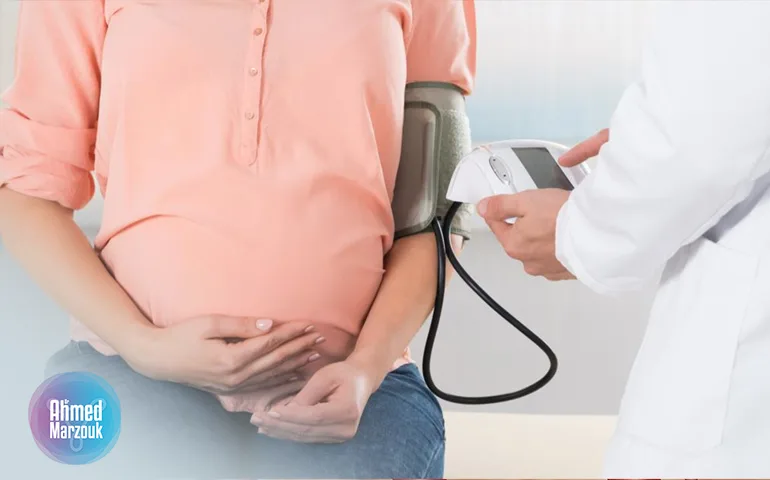
- The doctor monitors blood pressure and oxygen, and the heartbeats of the mother and fetus.
- The effect of the back injection wears off several hours after the catheter is removed.
- The doctor prefers that the patient walk inside the room to relieve numbness in the legs.
Important tips before giving the back injection in a cesarean delivery:
- Follow Dr. Ahmed Marzouk's instructions regarding the times to stop eating and drinking.
- The injection should be given by an experienced anesthesiologist.
When is the back injection taken for delivery? The back injection is taken at the onset of labor pains, or after the cervix has dilated by 3 cm.
What are the contraindications for using the back injection in a cesarean delivery?
- The woman's refusal of the painless delivery injection.
- The woman suffering from a bleeding (blood-thinning) disorder, increased brain pressure, brain tumors, or problems with the back vertebrae.
- Inflammation or a skin infection at the site of the back injection.
- In cases of previous blood loss due to hemorrhage.
- Suffering from low blood pressure.
- Having an allergy to any of the injection's components.
- In cases suffering from preeclampsia.
Painless injection for cesarean delivery — its benefits and harms? The back injection offers many advantages, including:
- Avoiding the risks of general anesthesia in cesarean operations, which poses a danger in some cases such as heart and respiratory system diseases.
- No need for artificial ventilation.
- It limits pain better than the painkillers given in the case of general anesthesia.
- The woman regains bowel movement and the ability to eat and drink faster and better than with general anesthesia.
- It reduces the amount of anesthetic drugs reaching the fetus compared with general anesthesia.
- It increases the mother's bond with the newborn, as she stays awake and experiences all the stages of delivery.
Despite the benefits of the back injection in cesarean operations, it does have some uncommon harms, and if they occur they quickly disappear, including: Low blood pressure: a few women may experience low blood pressure, so blood pressure is monitored during the operation so that it does not affect the continuity of blood flow to the fetus. Itching: some women may experience itching or minor skin irritation as a result of the anesthetic drugs, and to overcome this the doctor gives them anti-itching medications. Headache: some women may experience a headache after the back injection, so the doctor prescribes headache medications and advises drinking caffeine in moderation and consuming plenty of water. Elevated temperature: some women may experience a rise in temperature. Back pain: some women may experience back pain at the site of the painless delivery injection. Numbness in the legs: the doctor advises walking to relieve the numbness.
Price of the back injection for delivery: The price of the back injection for natural birth as well as for cesarean delivery varies due to several factors, including the doctor's experience in cesarean operations and the anesthesiologist's experience, as well as the experience of the doctor's assisting team, the quality of the hospital where the operation will take place, the medications used, and the follow-up after the operation.
My experience with the back injection for cesarean delivery: One woman tells her experience of a painless cesarean delivery with Dr. Ahmed Marzouk using the back injection, where she was afraid of feeling pain when the injection was inserted into the back, which did not happen with Dr. Ahmed Marzouk, and she did not feel any pain during the operation at all. She advises any woman who wants a painless cesarean delivery to go to Dr. Ahmed Marzouk, whom she considers the best in obstetric and gynecological surgeries.