Uterine fibroids have become widespread among many women recently, and with them concern has grown over delayed pregnancy and conception, and over the nature of the relationship between fibroids and pregnancy: does a fibroid prevent pregnancy or not? All these answers are provided with great skill and years of experience by Dr. Ahmed Marzouk, specialist in obstetrics and gynecological surgery, in this article.
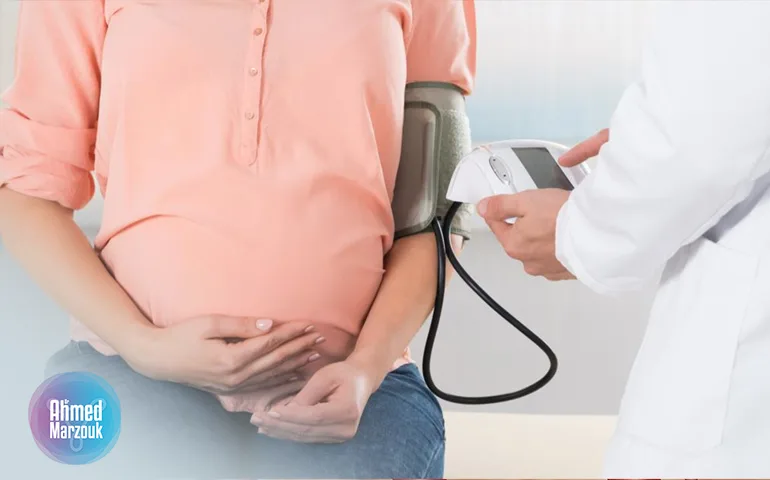
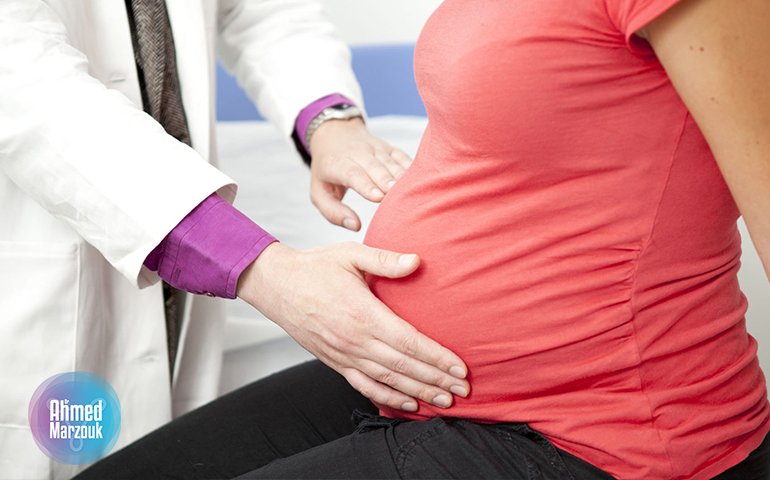
Symptoms of fibroids during pregnancy: Fibroids are benign tumors that grow in the muscles of the uterus, and they are often asymptomatic or cause only mild symptoms in most cases. However, some women may notice mild symptom changes during pregnancy due to the hormonal changes it brings about and the expansion of the uterus. Here are some symptoms that may appear in women who have fibroids during pregnancy: 1. Pelvic pain: Some women may feel mild pain or pressure in the pelvic area due to the expansion of the uterus and the increase in the size of the fibroids. 2. Increased pressure on the bladder: Fibroids may press on the bladder, leading to increased urination or a frequent urge to urinate. 3. Increased constipation: Fibroids can press on the intestines in some cases, causing constipation. 4. Lower back pain: Some women with fibroids may experience lower back pain.
Do fibroids grow with pregnancy? Yes, an increase in the size of fibroids may occur during pregnancy in some cases, due to the hormonal changes that take place during pregnancy which contribute to the expansion of the uterus; this expansion can therefore lead to an increase in the size of the fibroids present in the uterus.
The size of fibroids may not change during pregnancy, or a very slight change may occur in the uterus, depending on several factors including the size of the fibroid, its location, its effect on the uterus, and the hormonal changes taking place.
Fibroids outside the uterus during pregnancy: These are considered a rare type of fibroid, as they grow in the pelvic area outside the uterus itself. However, if a fibroid outside the uterus is discovered during pregnancy, you should take the following into account: 1. A woman who has a fibroid outside the uterus during pregnancy should visit the obstetrician and gynecologist regularly, to monitor the size of the fibroid and assess its effect on the pregnancy and the surrounding organs. 2. Symptoms occurring during pregnancy, such as pain or bleeding, should be monitored, and a careful medical evaluation undergone in an attempt to control any possible complications, such as fetal deformities or the fibroid negatively affecting the delivery process and posing a danger to the fetus and mother. 3. At times, a decision may need to be made to resort to surgery to remove the fibroid during or after pregnancy, based on Dr. Ahmed Marzouk's opinion, the progress of the pregnancy, the size of the fibroid, and the resulting symptoms; therefore it is essential that you stay in constant contact with us and follow up on the progress of the pregnancy throughout, if you have a fibroid outside the uterus.
Do fibroids cause bleeding during pregnancy? Yes, a fibroid may cause bleeding while it is present in the uterus during pregnancy, and the amount of bleeding that occurs depends on the size of the fibroid, its location, and how it affects the surrounding tissues. If the fibroid is large or if its location is close to the inner uterine wall, it can cause irritation of the surrounding tissues and thus increase the likelihood of bleeding during pregnancy.
Bleeding from a fibroid during pregnancy may vary in severity from one woman to another, and may be accompanied by pain or abdominal cramps; therefore, if you feel any bleeding during pregnancy or are worried about any symptoms, you should contact us immediately for an accurate and rapid assessment of your health and the condition of your fetus.
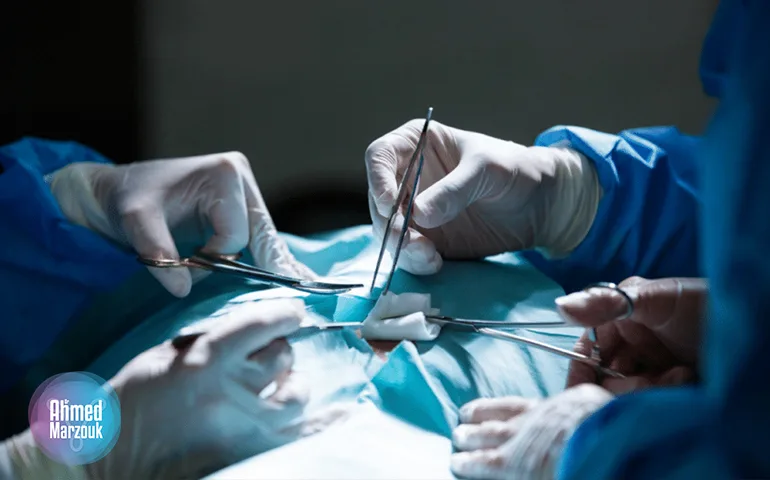
Pregnancy after fibroid removal: Does a fibroid affect pregnancy after its removal? Or does a fibroid prevent pregnancy after its removal? This question is one of the most important questions that may occupy the minds of many women, and we can answer it by saying that after removing the fibroid from the uterine wall or from inside the uterus itself, women can become pregnant naturally if their health allows it, and provided the fibroid has not affected any vital organ around the uterus or even the uterus itself. Now, here are some things you should take into account after fibroid removal to increase the chances of pregnancy: 1. The body needs time to heal after surgery, and you should take into account passing through the recovery period completely safely before trying to conceive. 2. It is essential to consult Dr. Ahmed Marzouk, consultant in obstetrics and gynecology, and to attend follow-up sessions regularly after surgery, to monitor the developments of your health and to know when pregnancy can be safely attempted. 3. You should take care of your health as much as possible, and commit to good nutrition and regular exercise, as they play an important role in improving overall health and thus increasing the chances of pregnancy. 4. Track your menstrual cycle and know your ovulation dates, as this can help determine the best time to try to conceive. 5. In some cases, the doctor may recommend taking some hormonal treatment to enhance the chances of pregnancy. 6. Follow up on the pregnancy when you become pregnant, and you must adhere to the doctor's guidance to maintain the health of the fetus and yourself.
Pregnancy rate after fibroid removal: Determining the success rate of pregnancy after fibroid removal, and knowing whether a fibroid really prevents pregnancy or not, depends on several factors including the size of the fibroid, its location, and how it affects the surrounding organs. In many cases, pregnant women who have small fibroids can conceive and give birth naturally after surgical removal of the fibroid. Some women may also face difficulty conceiving after fibroid removal if the fibroids were very large or caused significant damage to the uterus or any of the vital organs around it. Therefore, you should consult Dr. Ahmed Marzouk, obstetrician and gynecologist, to assess the situation for your personal case, and to obtain accurate information about the possibility of pregnancy after surgical removal of the fibroid.
With Dr. Ahmed Marzouk, you can treat all uterine fibroids easily and comfortably, and you can expect that having a fibroid and pregnancy with Dr. Ahmed Marzouk is not impossible, for the doctor is a pioneer in treating many cases of fibroids and achieving the dream of motherhood for them after they had lost hope for many years.