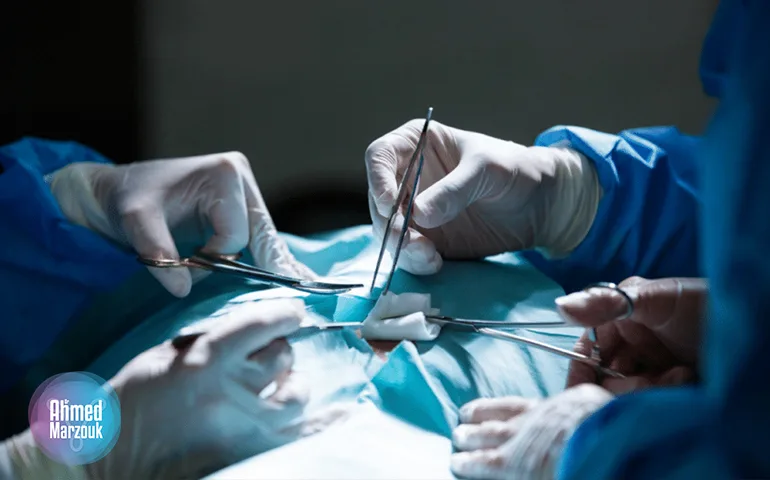
Some women who are going to have a cesarean delivery may need answers to a number of questions that may come to mind. Follow along with us in this article titled "Common Questions After a Cesarean Delivery" with Dr. Ahmed Marzouk, obstetrics and gynecology specialist.
Reasons for the absence of postpartum bleeding after a cesarean delivery
During a cesarean delivery, some incisions are made in the tissue of the uterus, and this cutting leads to the destruction of the blood vessels in the area adjacent to the uterus, and thus reduces the bleeding after delivery. In some cases, women who deliver by cesarean may experience less bleeding after the cesarean delivery compared with natural birth, and some of them may experience bleeding after forty days from the cesarean delivery. The following factors may contribute to the absence of postpartum bleeding after a cesarean delivery: 1. The use of some medications: some medications may be used for anesthesia and pain control after the operation, and some of these medications may affect the regulation of postpartum blood after the operation. 2. Blood clotting: in some cases, blood may clot inside the uterus after the cesarean, which leads to a reduction in postpartum bleeding. 3. Insufficient expansion of the uterus: the uterus may not expand sufficiently after the cesarean, which contributes to reduced postpartum bleeding.
Symptoms after a cesarean delivery
You may feel some common symptoms after a cesarean delivery, including the following: 1. Pain in the surgical area: you may feel pain and swelling in the cesarean surgical area. The pain may last for several days and may require taking painkillers to reduce its severity. 2. Low energy and feeling tired: a cesarean delivery is a surgical operation that requires going through a recovery period until the body regains its general strength, so you may feel tired and low in energy during the first recovery period. 3. Difficulty moving: because of the surgery and the muscular incision of the abdomen, you may face difficulty moving and difficulty performing some daily activities after delivery, so you will need some time to regain the ability to move normally. 4. Swelling and pain in the breasts: if you are breastfeeding, you may feel swelling and pain in the breasts due to the engorgement of milk and its accumulation in the breast. Cold compresses can be used on the breast to relieve the symptoms. 5. Mood changes: you may experience mood changes after delivery, such as a constant feeling of sadness. 6. Difficulty urinating: you may face some difficulties urinating after the cesarean, due to the effect of the surgery on the muscles and nerves surrounding the abdominal area.
When can a postpartum woman shower after a cesarean delivery?
A postpartum woman can shower after a cesarean delivery after a specific period of time to allow the wound to heal and to avoid any potential complications, and it is recommended to follow the following guidelines: 1. Consult your treating doctor: before showering after a cesarean delivery, you should consult your treating doctor about the date on which you can shower. 2. Wait until the wound heals: the wound must heal well before you shower. This often takes about two to three weeks, but the time may differ from one case to another. 3. Use lukewarm water and a mild soap that does not contain chemicals when showering after a cesarean delivery, then dry the area well after showering. 4. Hot water should be avoided, as it can increase the swelling of the wound and cause extra pressure. 5. Make sure to take good care of the wounds and the stitching site according to the treating doctor's instructions, as you may need to change the dressings and clean the wounds regularly.
Pain during marital relations after a cesarean delivery
When is it permissible for a man to have intercourse with his wife after a cesarean delivery? The couple may face pain in sexual relations after a cesarean delivery, as it needs time to recover from the surgical operation, and there may be hormonal and physical changes that affect sexual desire and comfort during intimate relations. This may include some of the following symptoms and challenges: 1. Pain: the wife may feel pain in the area of the surgical incision after the cesarean delivery, which needs time to recover, and the pain may be present during intimate relations. 2. Sexual desire: there may be a change in the sexual desire of the postpartum woman after the cesarean delivery, based on the hormonal changes that can affect sexual desire and sexual communication between the two partners. 3. Increased emotions and tension: there may be intense tension and emotions after delivery, which may affect the marital relationship in general and sexual desire in particular. 4. Women may have concerns about the change in the shape of their bodies after delivery, such as weight gain or sagging, and this can affect self-confidence and readiness for intimate relations.
Therefore, it is important to talk frankly with your partner about the negative feelings you are experiencing and to ask him for help in getting rid of them so that you can get through this period with the least amount of complications. You should also consult Dr. Ahmed Marzouk about some matters, such as: when does the menstrual cycle return after a cesarean delivery? How do I avoid gas after the cesarean operation? How big is the cesarean wound? How long does bleeding continue after a cesarean delivery? Or if you notice any hard mass in the abdomen after the cesarean delivery.